

Ravana & Trincomalee
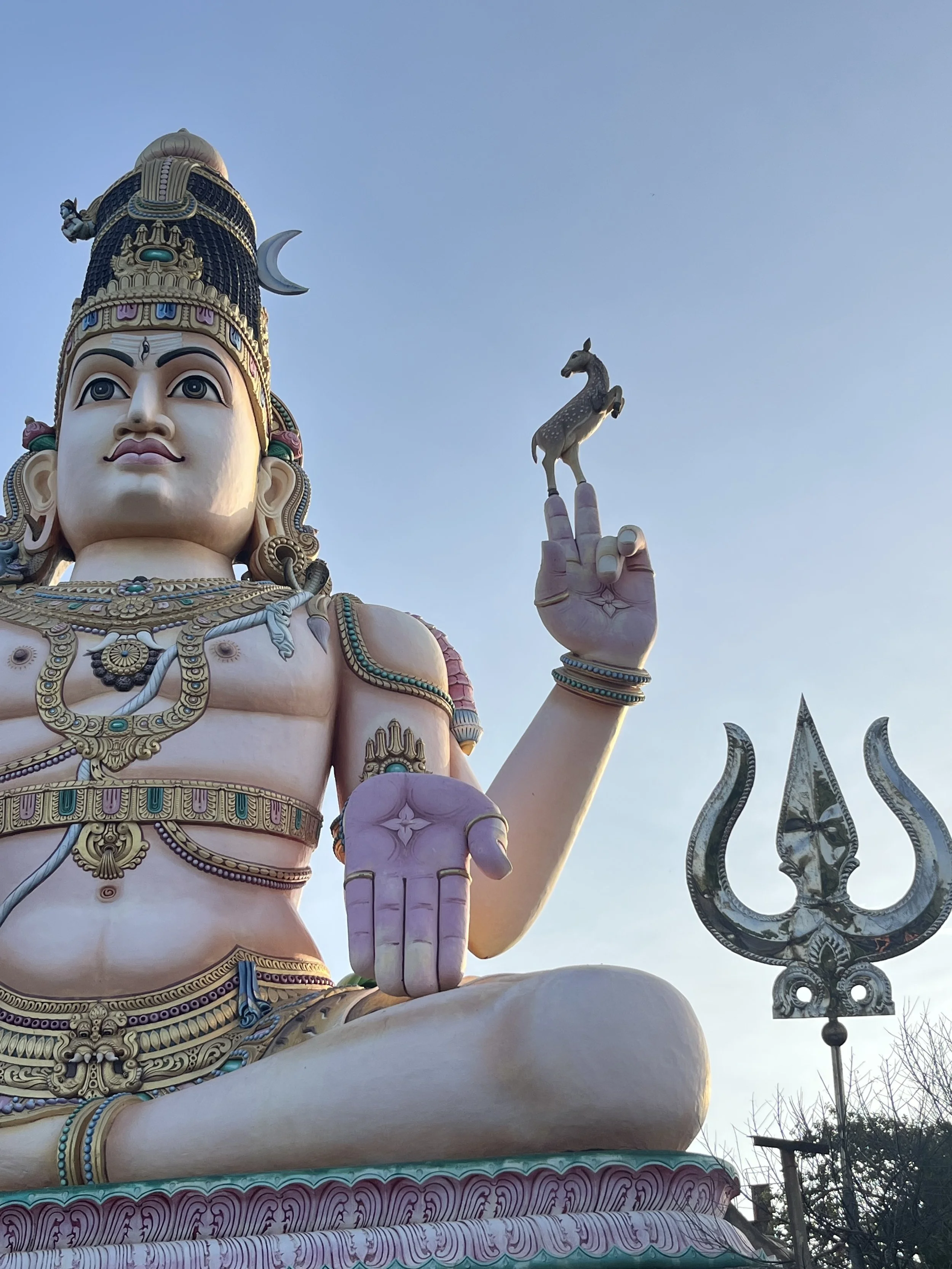
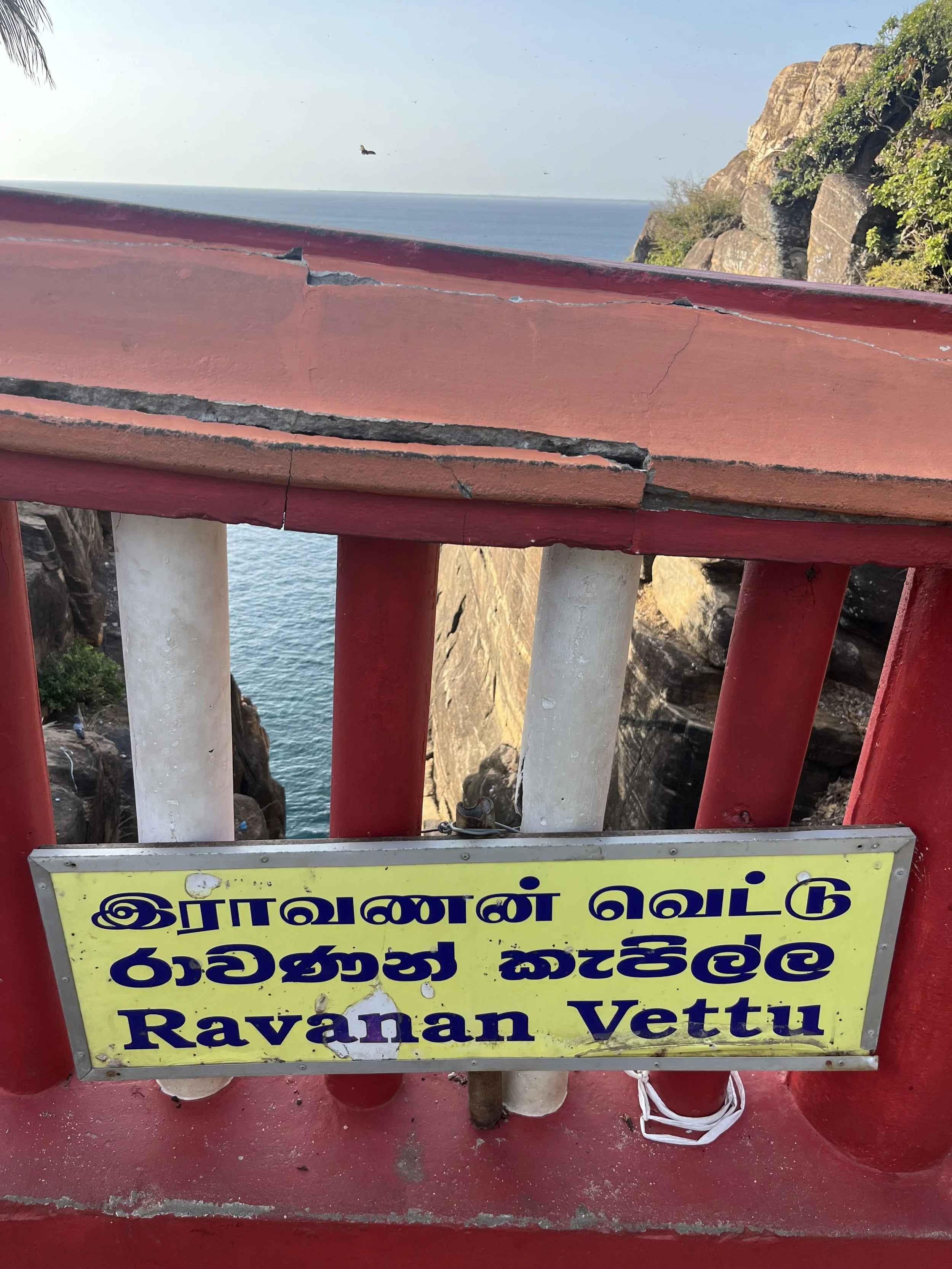
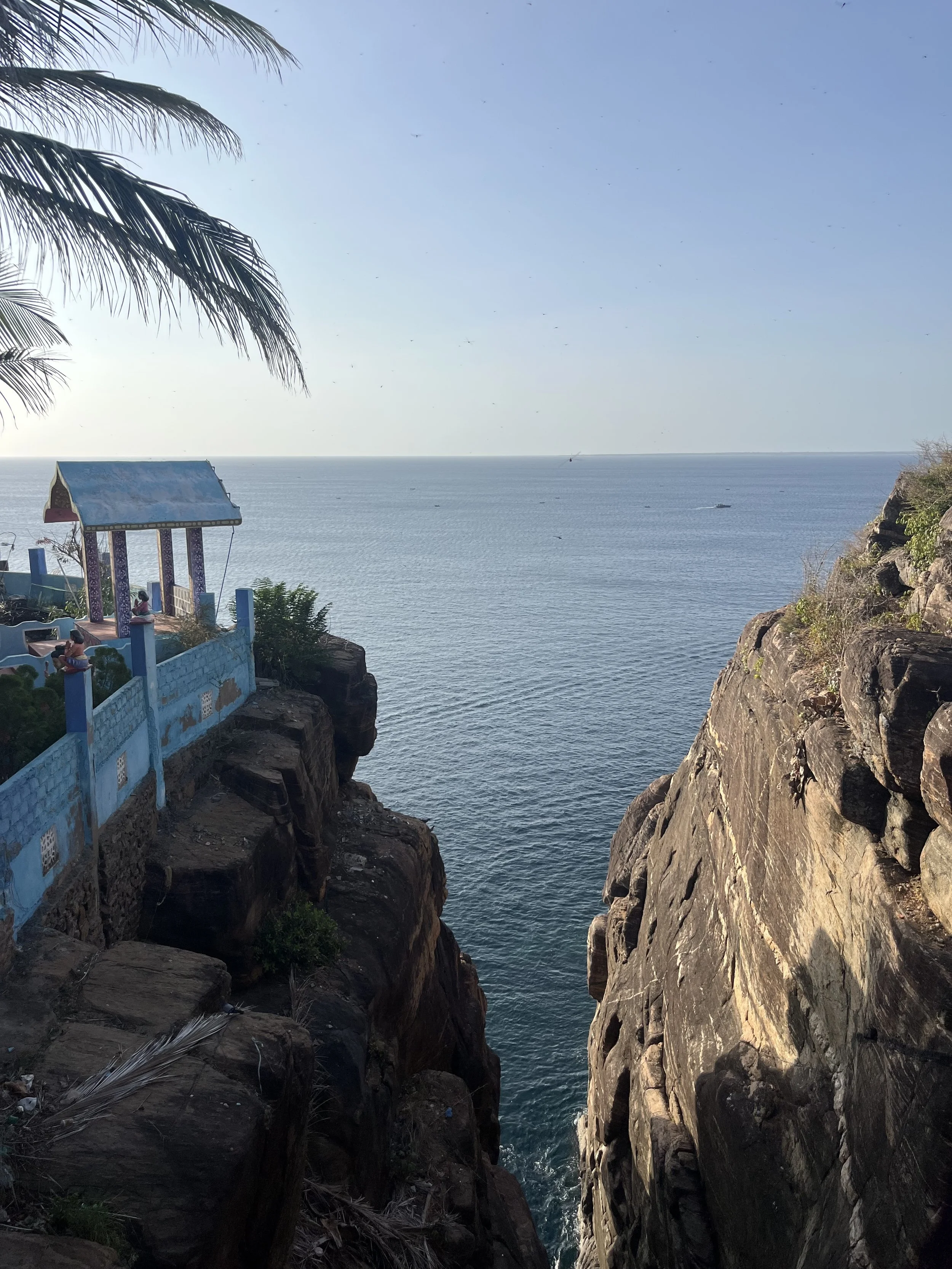
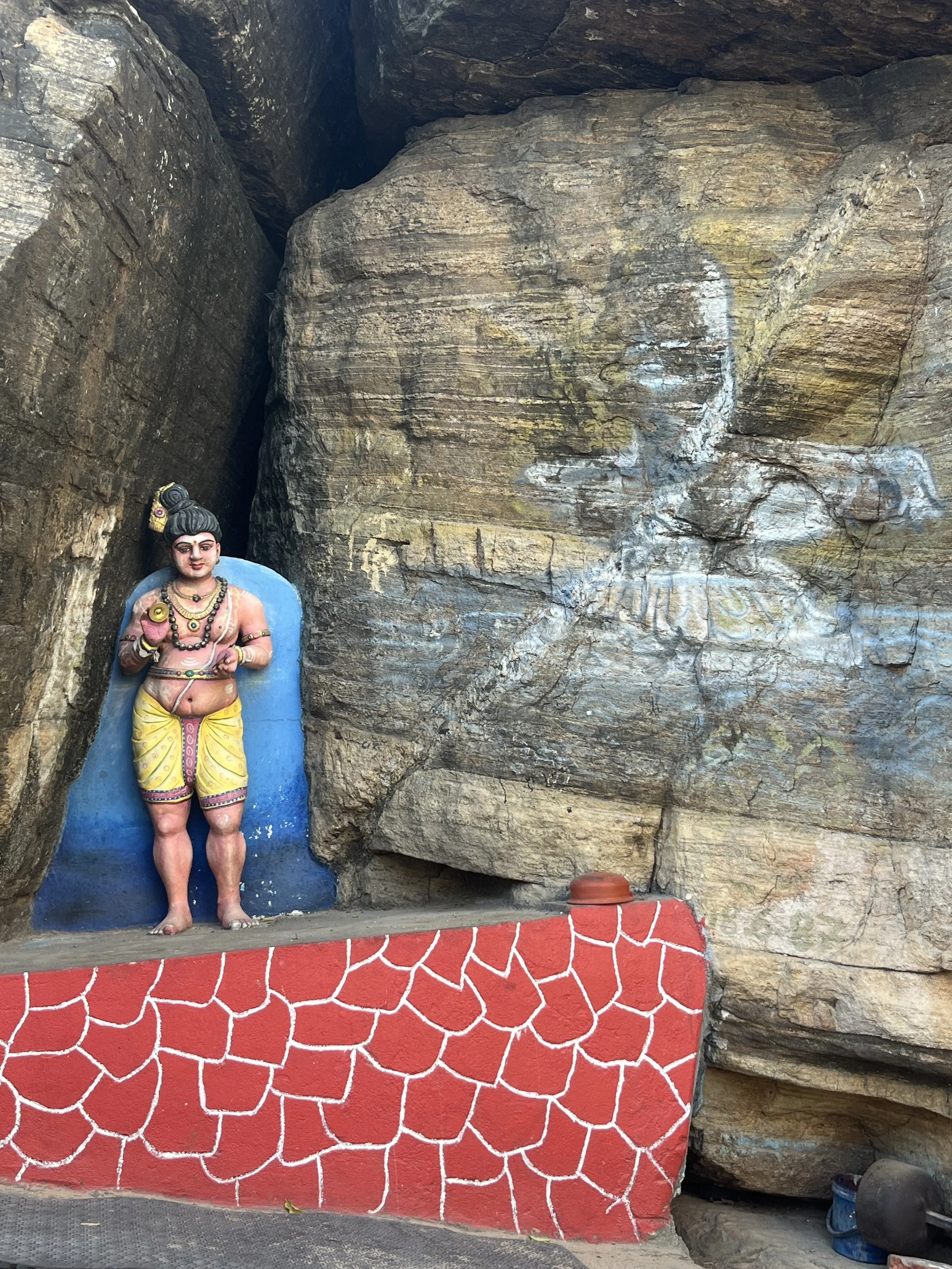
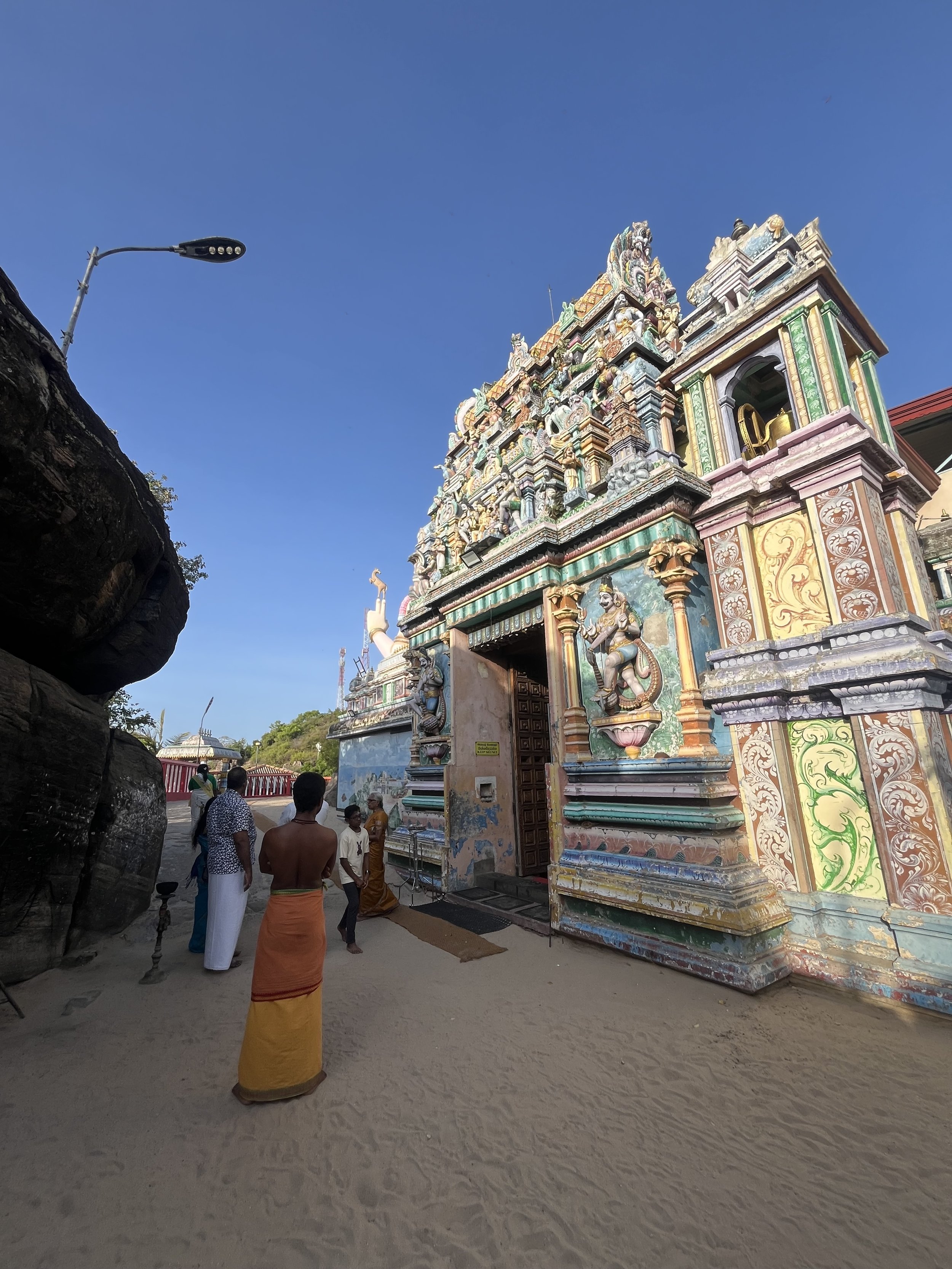
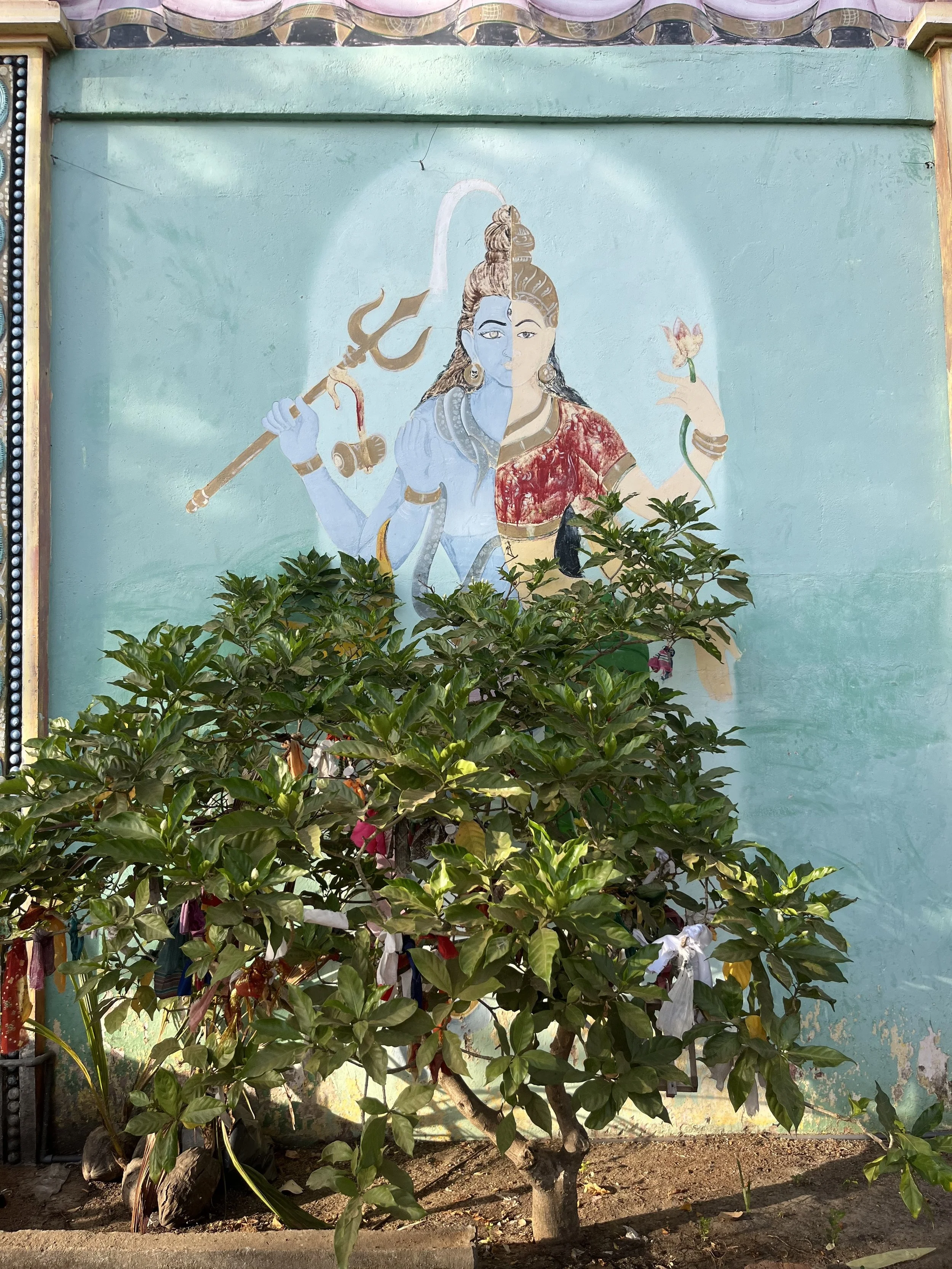
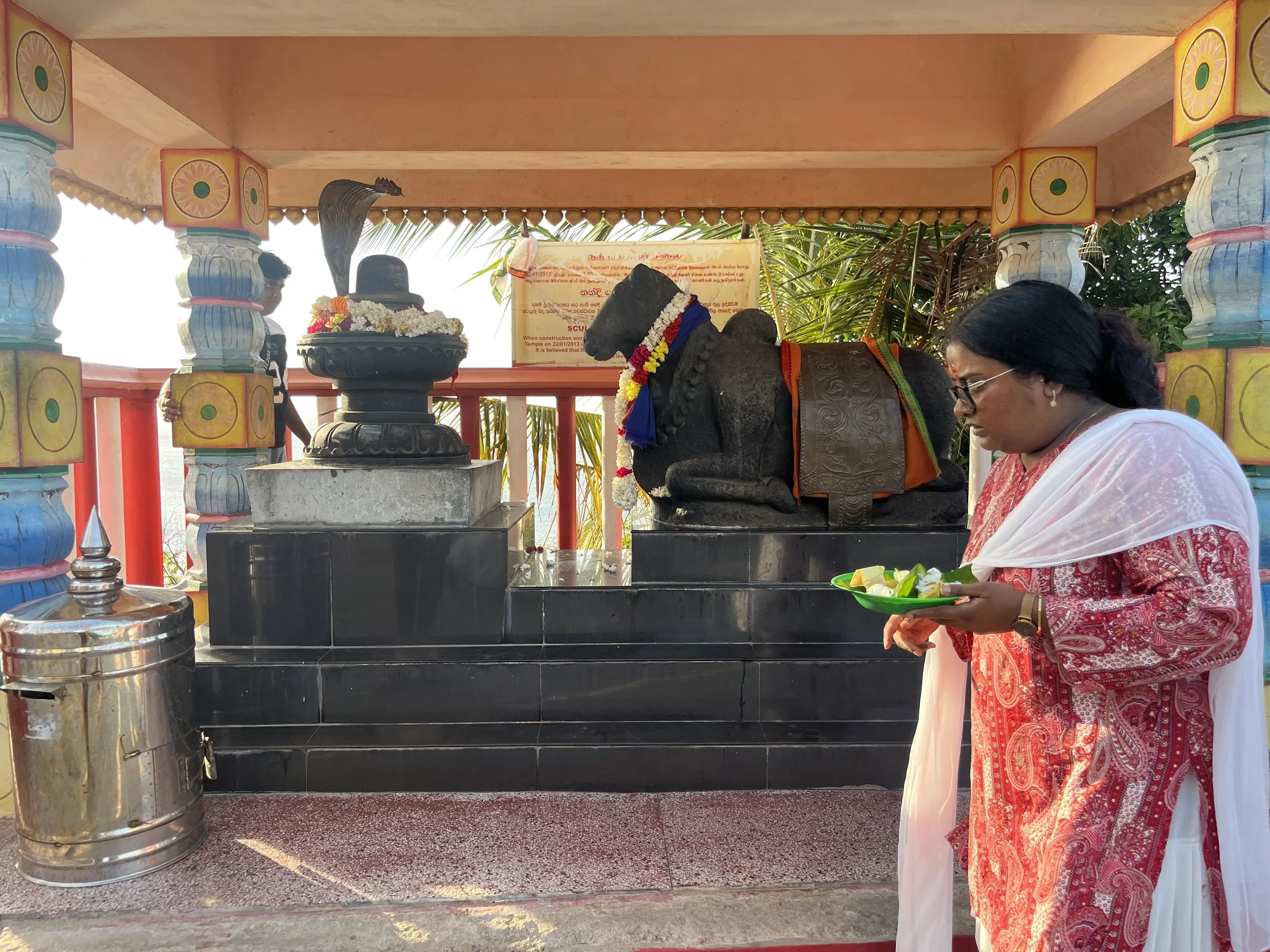
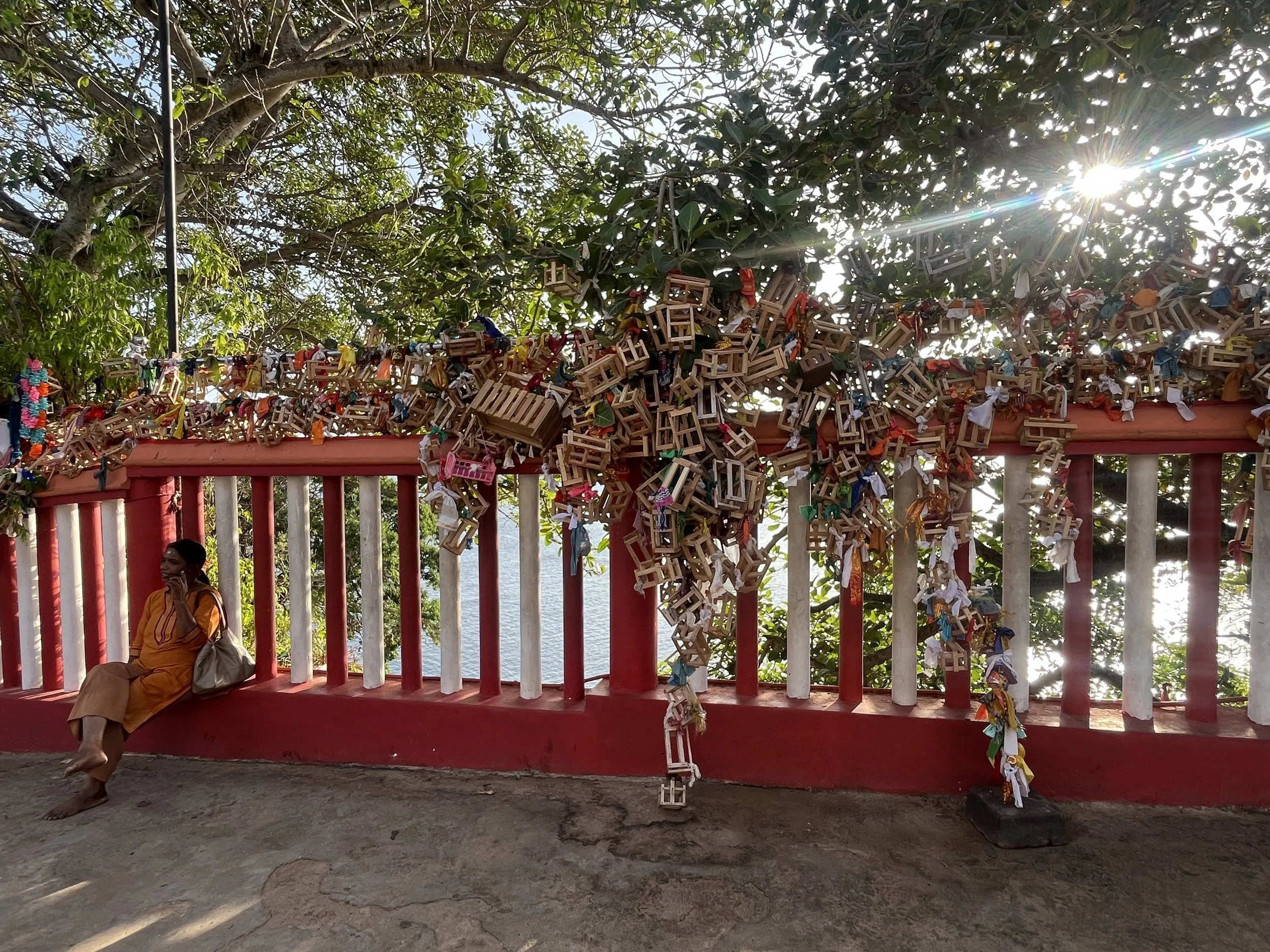
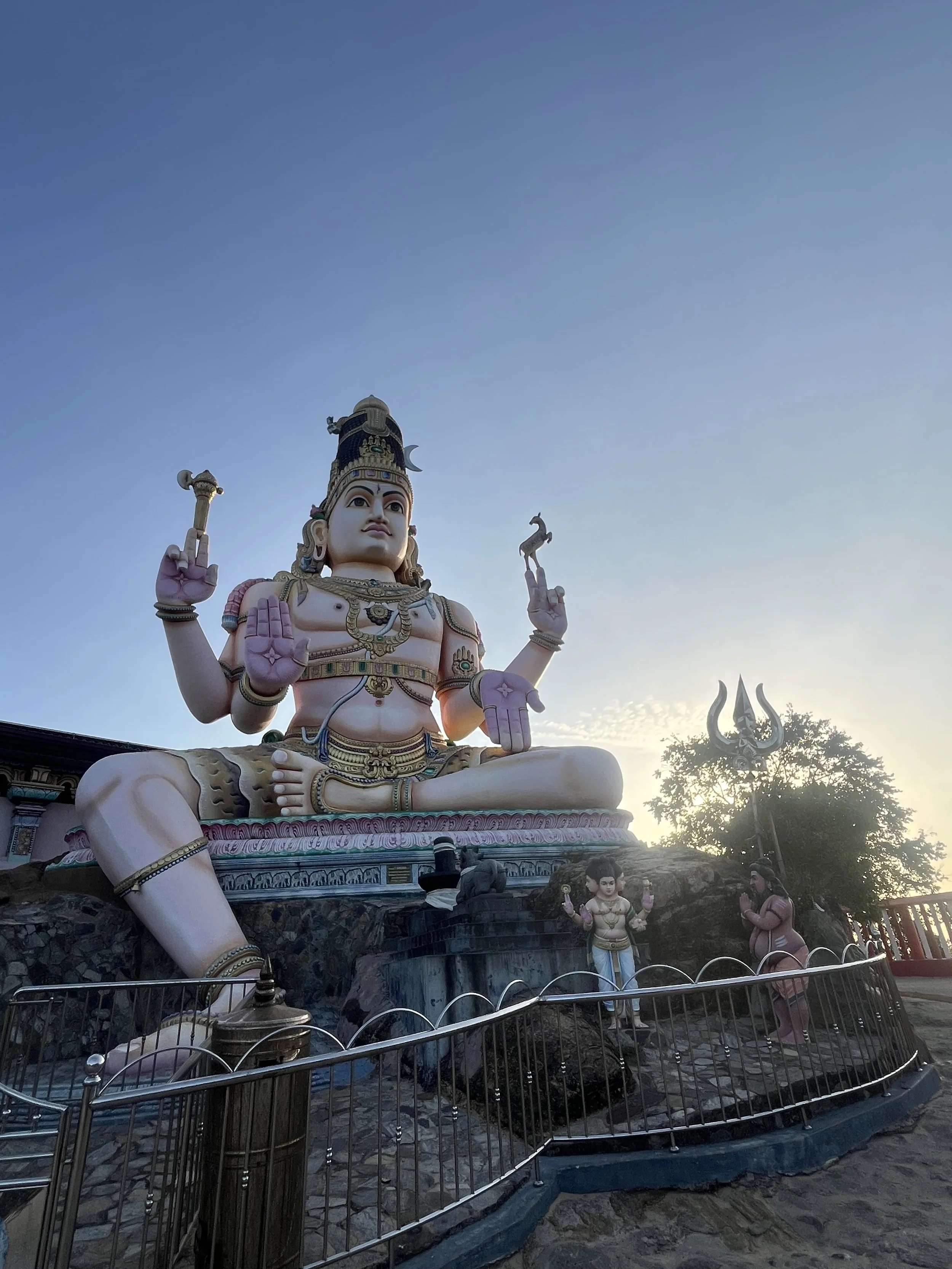
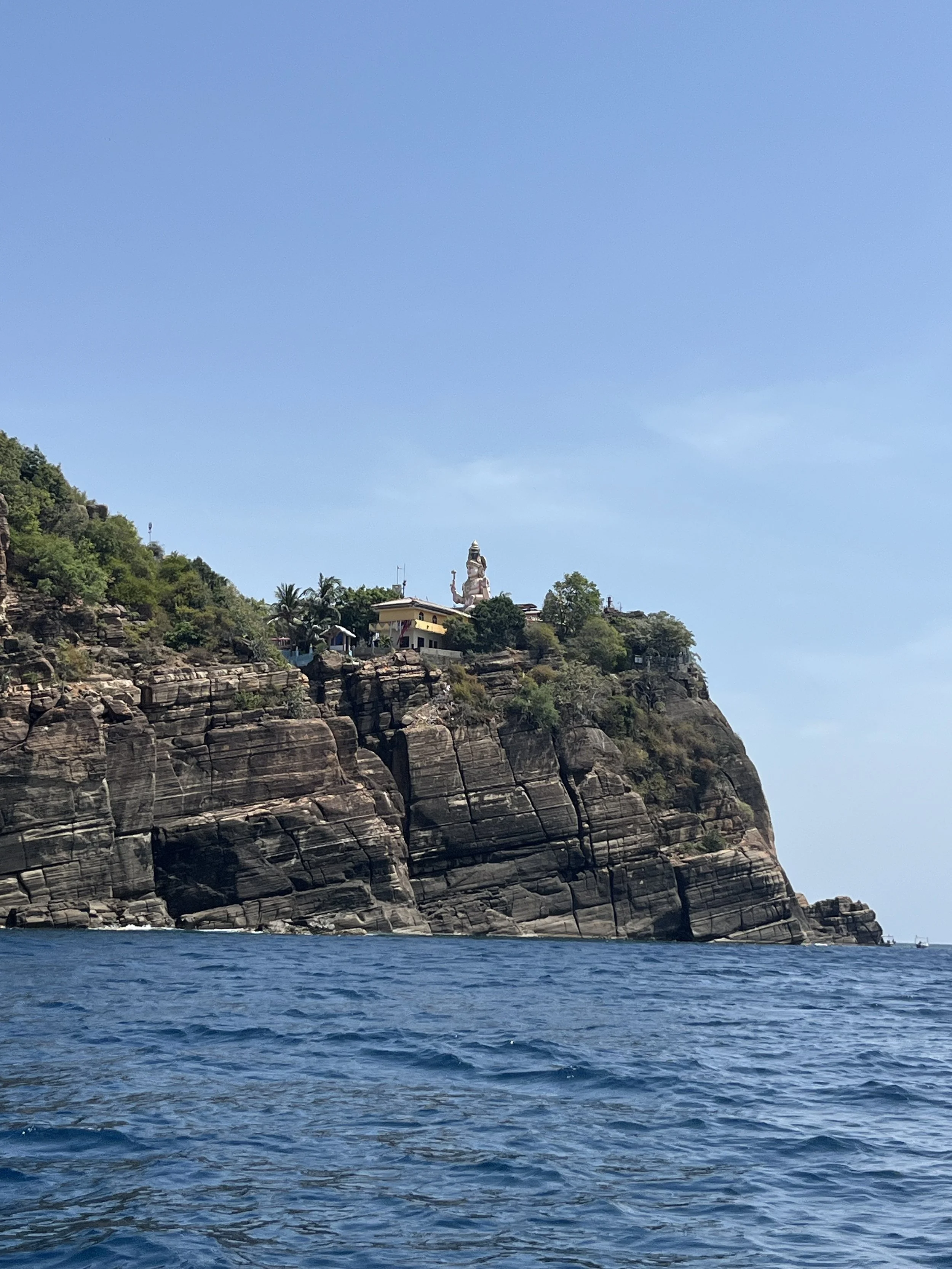
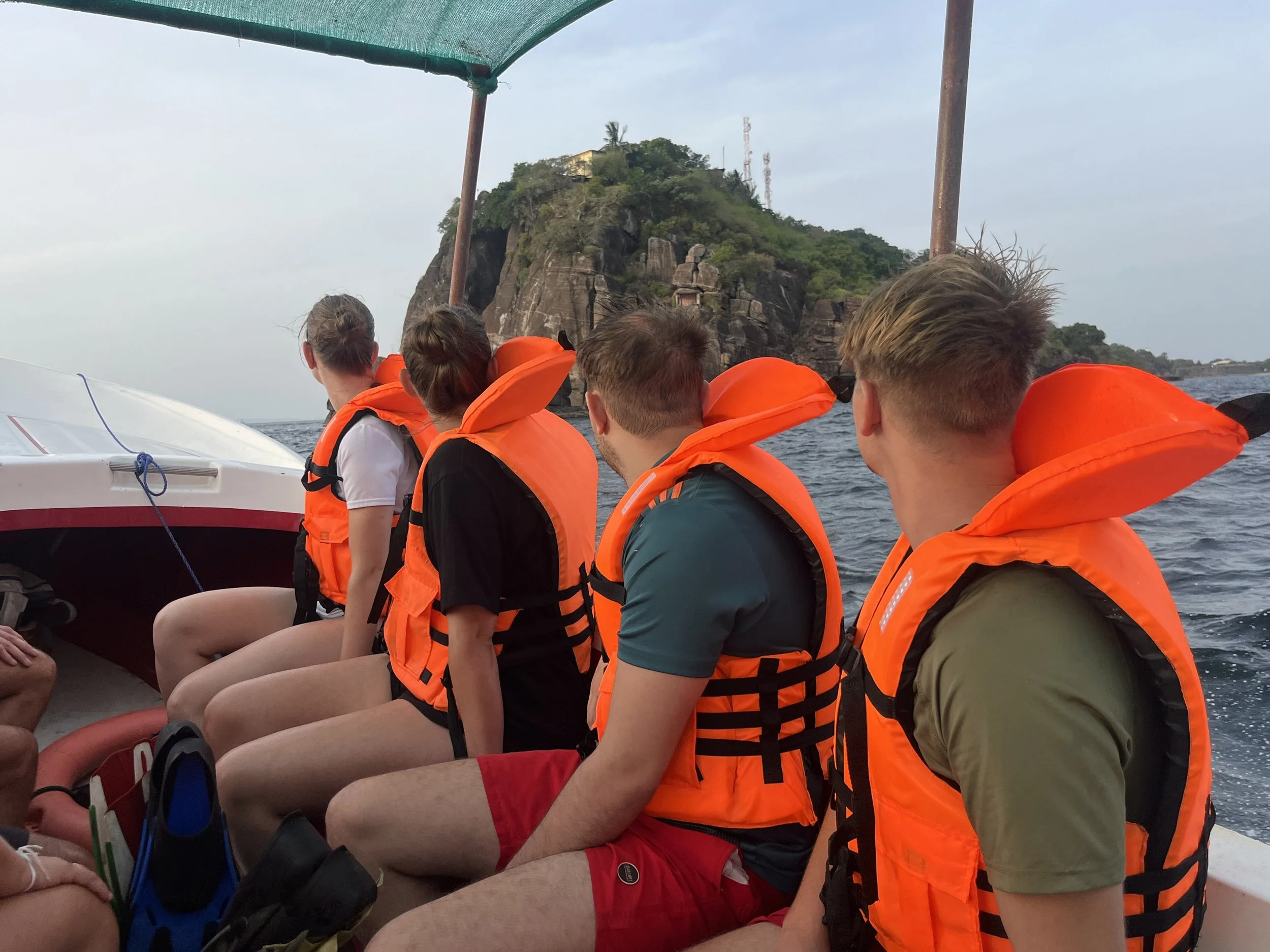
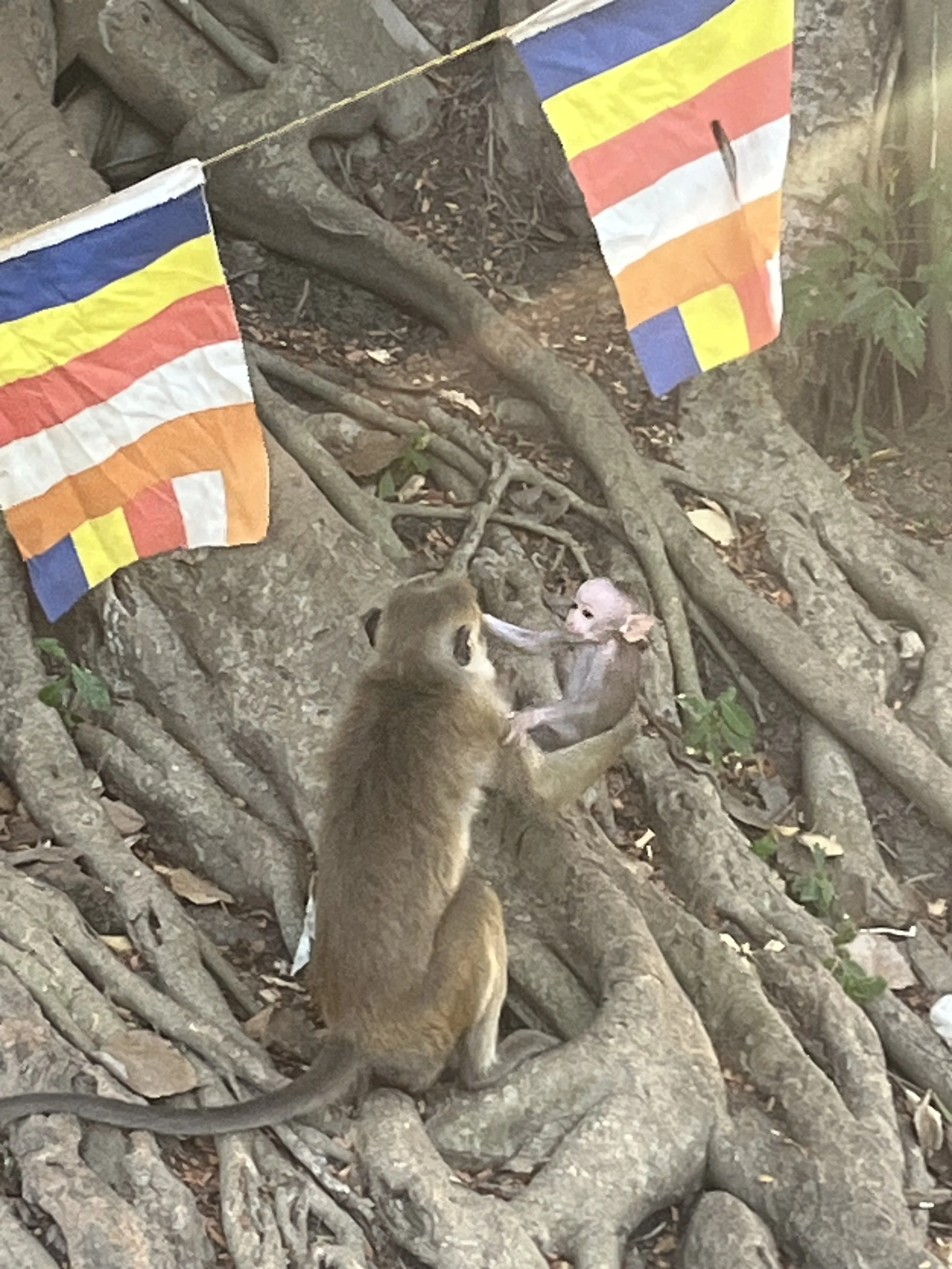
As an American passport-holding yogini on an epic 7-week visa exile from India (that's how long it took me to update my visa this time... long story), I recently visited the beautiful coastline and mountainous forests of Sri Lanka.
Relatedly, I found myself reflecting on questions raised in the ancient Sanskrit epic, the Ramayana.
For those who may not be familiar, the Ramayana tells the story of Lord Rama, the 7th incarnation of Lord Vishnu, being exiled from his kingdom of Ayodhya, along with his brother Lakshmana and his wife, Goddess Sita.
In the forest of their exile, Sita becomes enchanted by a demon who has shapeshifted into a shimmering golden deer.
Sita urges Rama to pursue the deer, leaving herself vulnerable to Ravana, the king of Lanka, who disguises himself as a wandering ascetic in order to trick and abduct her to Lanka. Ravana pressures Sita to forsake Rama and become his queen. She doesn’t.
Lord Hanuman, the beloved monkey deity whose devotion and service to Rama and Sita embody the very heart of bhakti, guides Rama to Lanka to rescue Sita.
Rama defeats Ravana in battle, frees Sita from captivity, and restores dharma and righteous rule. That's basically a brief summary of the story.
While travelling in Sri Lanka, I have been reflecting on the complexity of its characters. Why do they do what they do?
Their divinity doesn't erase their humanity. It reveals it.
Especially Ravana.
Ravana is not simply the evil villain in the epic.
He's also a brother seeking to avenge the humiliation and mutilation of his sister, Shurpanakha.
He's a brilliant scholar, an accomplished musician, a powerful king, a grieving son... and one of Shiva's great devotees.
In Trincomalee, Sri Lanka, the legacy of Ravana runs like a shimmering thread woven through the landscape.
The ancient Koneswaram Temple, one of the Pancha Ishwarams, the five great sacred temples dedicated to Lord Shiva on the island, is perched dramatically atop Swami Rock overlooking the Indian Ocean.
It is said that Ravana himself came here to worship Shiva.
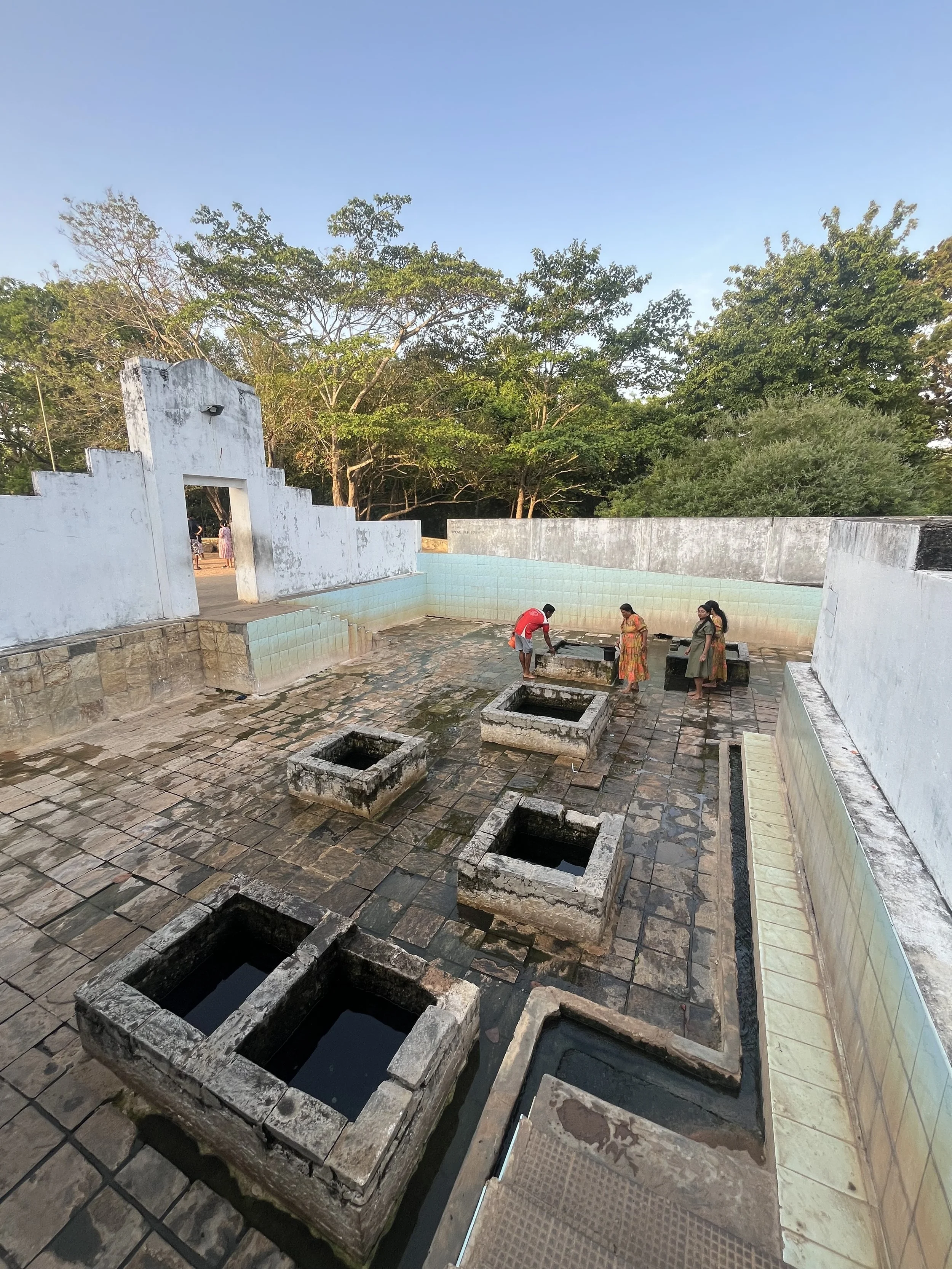
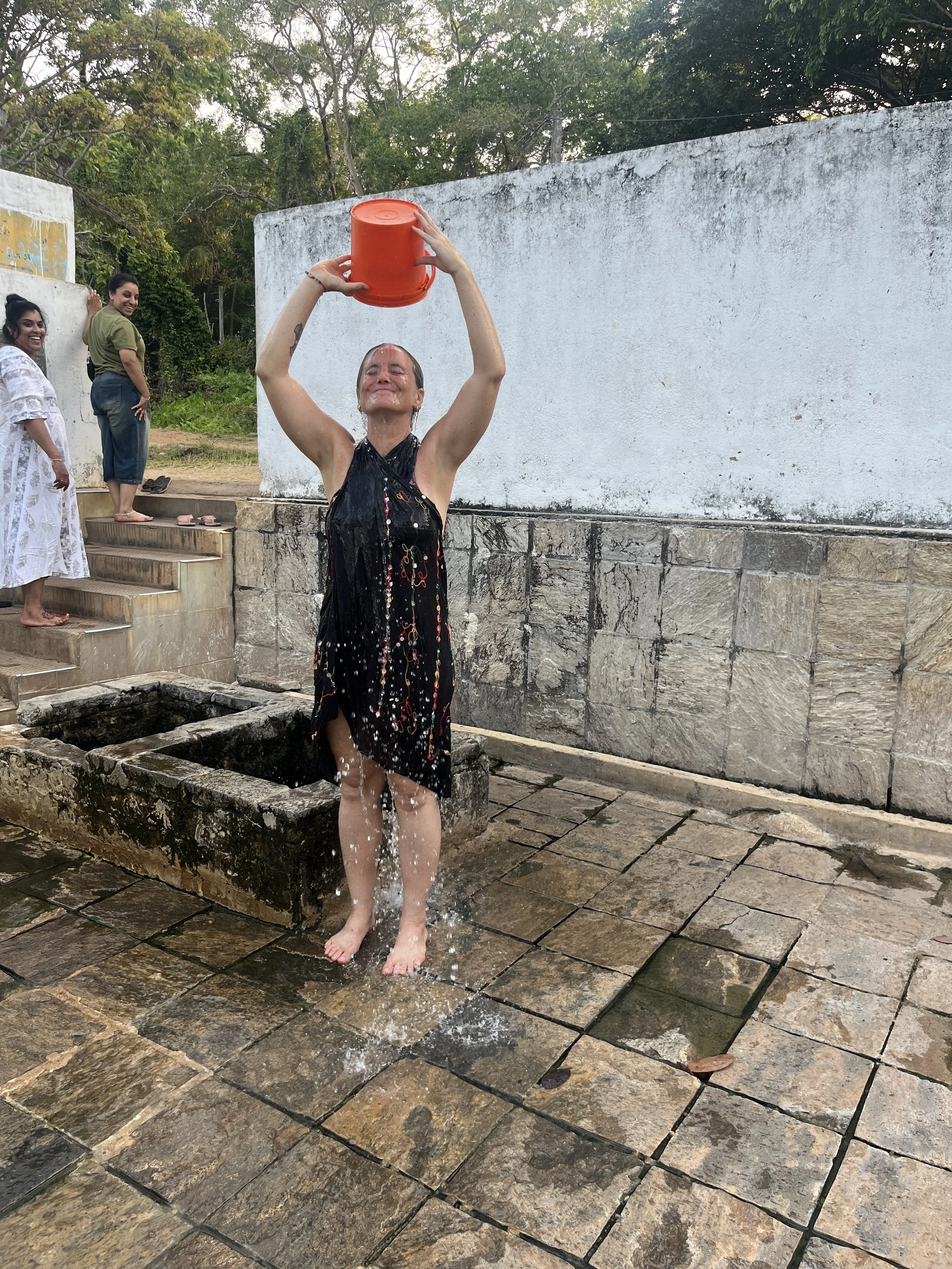
Nearby, at the Kanniya hot springs, legend tells that Ravana struck the earth in grief after his mother's death, seeking water so he could perform her final rites. From his 7 grieving blows, 7 geothermal springs are said to have emerged. The warm waters continue to rise naturally through the bedrock to this day.
Whether these stories of Ravana and the Ramayana reflect actual history, shared mythology, or something in between... is maybe not the point.
The point is to see how the questions these ancient stories raise can help humanity navigate the present...
How can someone so deeply devoted to Lord Shiva, and so loving of his mother, also become the man who abducts Sita?
Are love and devotion not enough to fully realize Yoga? Peace? Freedom?
If not, what else is required?
Can we receive the grace of the Divine and still suffer from the kleshas?
Wait, what are the kleshas?
(So glad you asked. ;-)
The Yoga Sutras of Patanjali describe the kleshas as the five root causes of suffering:
Avidya — Ignorance
Asmita — Ego
Raga — Attachment
Dvesha — Aversion
Abhinivesha — Clinging to life / Fear of death
Although Ravana is a great devotee of Shiva, his devotion never exempts him from suffering his karma, from facing the consequences of his actions conditioned by the kleshas.
It reminds us:
You can be a great devotee of the Divine.
You can master the scriptures, music, and many fields of study.
You can rule a kingdom.
You can love your mother.
And you can still be driven by ignorance, ego, attachment, aversion, and fear.
One more observation...
It took 7 weeks for me to receive my new Indian visa so I could return from Sri Lanka to India.
Rama is traditionally regarded as the 7th incarnation of Vishnu.
In Trincomalee, where I spent a total of 7 days, tradition says Ravana struck the earth 7 times, giving rise to the 7 Kanniya hot springs.
A mandala of 7s!
So I return to India from Sri Lanka with far more than a new visa. I return with a fresh engagement in the living philosophy shared between these lands; the timeless invitation to know ourselves truthfully.
If you'd like to explore such questions more deeply and reflect on yoga philosophy together, I welcome you warmly to the next round of my Patanjali Yoga Sutra Study Circle.
